Together, we solve the challenges of tomorrow.
LEARN MORE →Ground investigation in Sheffield forms the critical first step in any construction or civil engineering project, providing essential data on the physical and mechanical properties of the soils and rocks beneath a site. This category encompasses a range of intrusive and non-intrusive techniques designed to characterise ground conditions, identify potential hazards such as mine workings or unstable slopes, and inform safe, cost-effective foundation design. Given Sheffield's complex post-industrial landscape, a robust site investigation is not merely a regulatory requirement but a fundamental engineering necessity to mitigate risks and prevent structural failure.
The geology of Sheffield presents a varied and challenging environment for development. The city is famously built upon the Carboniferous Coal Measures, a sequence of interbedded sandstones, mudstones, siltstones, and historic coal seams. These strata are overlain in the valleys by variable thicknesses of alluvial and glacial deposits, including soft clays and silts. Crucially, centuries of mining and industrial activity have left a legacy of shallow mine workings, backfilled quarries, and made ground, all of which pose significant risks of subsidence and ground instability. Understanding this intricate ground profile demands a targeted investigation strategy.
All ground investigation work in the UK must be conducted in accordance with the stringent technical requirements of British Standards, most notably BS 5930:2015+A1:2020, the code of practice for ground investigations. This standard governs the planning, execution, and reporting of investigations. Furthermore, Eurocode 7 (BS EN 1997-2) provides the overarching framework for geotechnical design, mandating that investigations are sufficient to establish the ground model and derive characteristic values for design parameters. Compliance with these standards is essential for discharging planning conditions and securing building regulations approval.
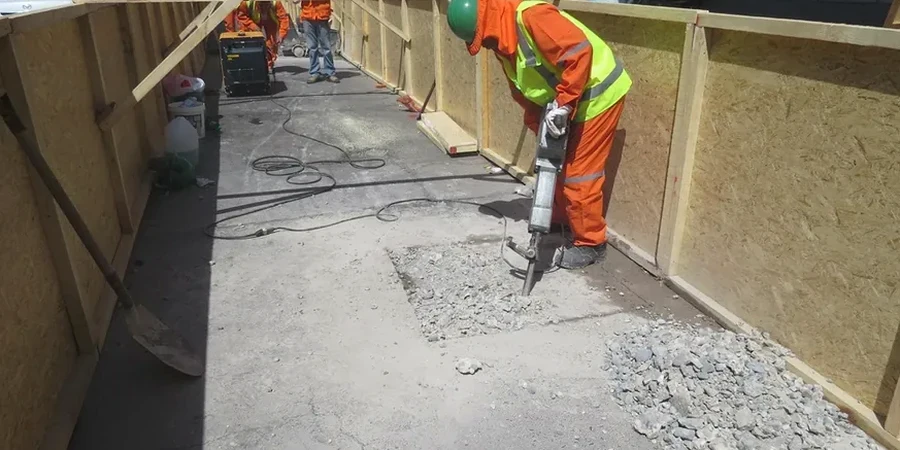
A comprehensive investigation for a Sheffield project will typically deploy multiple techniques to build a complete ground model. For an initial assessment of shallow ground conditions and to expose buried features, an exploratory test pit is an invaluable and rapid method. To determine the stratigraphy and strength of deeper soils, CPT (Cone Penetration Test) provides continuous, high-resolution data, particularly effective in the soft alluvial clays of the Don Valley. In granular soils and weathered rock zones, where CPT refusal may occur, SPT (Standard Penetration Test) from a borehole is the standard method for assessing relative density and strength, also allowing for sample recovery and subsequent laboratory testing. The integration of these methods is key to a successful investigation.
Sheffield's unique geology, dominated by the Carboniferous Coal Measures and a legacy of historic mining, presents significant hazards like shallow mine workings, made ground, and variable drift deposits. A ground investigation is essential to identify these risks, characterise ground strength, and allow engineers to design foundations and remediation strategies that prevent subsidence and structural failure.
The primary standard is BS 5930:2015+A1:2020, which provides the code of practice for site investigations. For geotechnical design, Eurocode 7 (BS EN 1997-2) is applied. These standards dictate the planning, sampling, in-situ testing, and reporting quality required to produce a reliable ground model for safe and compliant design.
A typical investigation uses a phased approach. It often begins with a desk study of historical maps and mining records, followed by an intrusive investigation. This combines machine-dug trial pits for shallow visual inspection with deeper boreholes using techniques like SPT and CPT to probe depth to rockhead and assess for voids or broken ground associated with mine workings.
A ground investigation should be commissioned at the earliest possible stage, ideally before detailed design work begins. The findings directly influence foundation design, cut-and-fill strategies, and remediation requirements. Waiting until after planning approval is risky, as unexpected ground conditions can cause significant delays, redesign costs, and construction programme overruns.
We serve projects across Sheffield and its metropolitan area.