Together, we solve the challenges of tomorrow.
LEARN MORE →Foundations represent the critical interface between any structure and the ground beneath it, transferring loads safely into the earth while protecting against settlement, heave, and environmental degradation. In Sheffield, where a legacy of heavy industry and complex hillside topography converge, foundation engineering demands a nuanced understanding of local ground conditions. From the sandstone ridges of the Pennine foothills to the alluvial deposits in the Don Valley, the city's geology varies dramatically over short distances, making site-specific foundation design essential for long-term structural integrity. Whether supporting a Victorian terrace extension in Crookes or anchoring a multi-storey development in the city centre, the right foundation solution mitigates risk and ensures compliance with rigorous safety standards.
Sheffield's underlying geology is dominated by the Carboniferous Coal Measures, comprising interbedded sandstones, siltstones, mudstones, and historic coal seams. Much of the urban core sits on the Pennine Lower Coal Measures Formation, where competent sandstone bands like the Crawshaw Sandstone provide excellent bearing strata, but are often overlain by weaker mudstones and made ground. Glacial till and head deposits cloak many valley slopes, while the floodplains of the River Don and its tributaries contain soft alluvium and peat lenses that can challenge shallow foundations. Crucially, Sheffield's industrial past has left a widespread legacy of unrecorded mine workings, backfilled quarries, and contaminated fill, all of which introduce significant ground stability and gas protection requirements that directly influence foundation selection and depth.
All foundation design and construction in Sheffield must adhere to the UK's robust regulatory framework, principally Eurocode 7 (BS EN 1997): Geotechnical Design, alongside its UK National Annex. This is supported by BS 8004:2015, the code of practice for foundations, and BS 5930 for site investigation. For projects involving former mining areas, the Coal Authority's permitting process and the guidance within CIRIA C758D on abandoned mine workings are non-negotiable. Building Regulations Part A governs structural safety, while NHBC Standards apply to new residential developments. A thorough desk study and intrusive ground investigation, compliant with these standards, are the mandatory precursors to any foundation design, ensuring that ground risks are identified and managed from the outset.
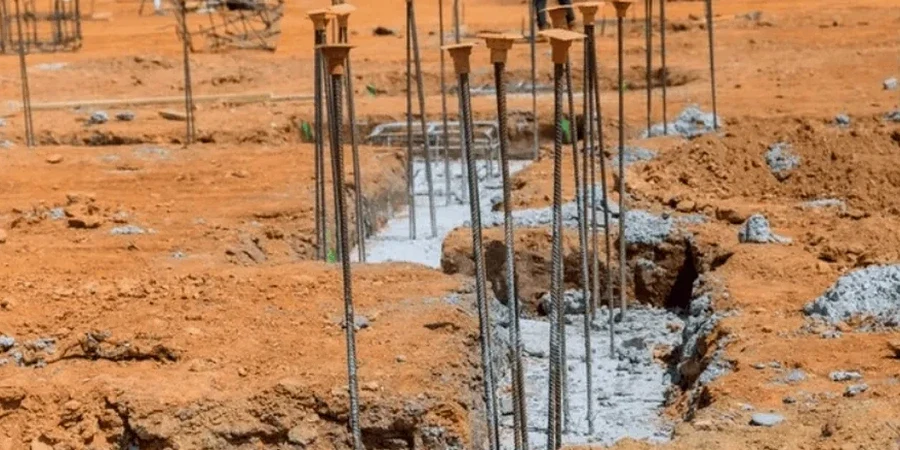
The diversity of Sheffield's building stock and terrain means foundation solutions must be equally varied. Traditional strip footings may suffice on shallow, competent sandstone in areas like Fulwood, but deep pile foundation design becomes necessary where weak alluvium or fill extends to depth, such as in the Lower Don Valley. Ground beams and mini-piles are frequently specified for challenging hillside plots or where trees influence cohesive soils, requiring careful consideration of heave potential. Major commercial schemes in the Kelham Island regeneration zone often demand complex piled raft solutions to control settlement on variable ground, while basement constructions in the city centre require embedded retaining walls and under-pinning expertise. Each project type, from a domestic conservatory to a high-rise residential tower, triggers a unique combination of load, ground, and regulatory constraints that define the foundation strategy.
The primary factors are the ground conditions revealed by a site investigation, including soil type, bearing capacity, and the presence of fill or mine workings, alongside the structural loads from the building. Proximity to trees, slope stability, and the local groundwater regime also play critical roles. Sheffield's variable geology means two adjacent plots can require completely different foundation solutions, making a desk study and physical investigation essential before design begins.
Yes, a ground investigation is mandatory and a prerequisite for any credible foundation design. It must comply with BS 5930 and Eurocode 7 to adequately characterise the site. In Sheffield, this is particularly vital to identify made ground, buried structures, or mine workings from the city's industrial past. Skipping this stage risks encountering unforeseen ground hazards during construction, leading to costly delays, redesign, or structural failure.
Much of Sheffield lies within a former coalfield, so the Coal Authority's records and permitting process are often legally required. If a desk study identifies shallow mine entries or workings, a Coal Authority permit is needed before intrusive investigation or construction. Foundation designs must then incorporate measures like reinforced rafts or piles to bridge potential voids, and gas protection may be mandated, all in accordance with CIRIA C758D guidance.
Shallow foundations, such as strip or pad footings, transfer loads to competent ground near the surface and are used where strong strata like sandstone are shallow. Deep foundations, primarily piles, are required when surface soils are weak, compressible, or contaminated, transferring loads to a deeper, stable bearing layer. In Sheffield's valleys, deep alluvium often necessitates piles, whereas hillside sites on rock may only need shallow footings.
We serve projects across Sheffield and its metropolitan area.