Together, we solve the challenges of tomorrow.
LEARN MORE →Underground excavations in Sheffield represent a specialised discipline of geotechnical engineering that encompasses the planning, design, and construction of subterranean spaces within complex geological settings. This category covers everything from the initial ground investigation and laboratory testing through to advanced numerical modelling and construction supervision. The importance of rigorous underground excavation practice in Sheffield cannot be overstated, given the city's dense urban fabric, its hilly topography, and the increasing demand for infrastructure that minimises surface disruption. Whether for transport, utilities, or commercial basements, the success of any subsurface project hinges on a thorough understanding of ground behaviour and the application of robust engineering controls to manage ground movement, groundwater, and structural stability.
Sheffield's geological landscape is a direct legacy of its industrial past and its position on the eastern edge of the Pennines. The city is underlain by the Upper Carboniferous Coal Measures, a layered sequence of sandstones, siltstones, mudstones, and historically worked coal seams. These strata are often highly variable over short distances, presenting a challenging transition between competent rock and weaker, weathered material. Superficial deposits, including glacial till, alluvium in the river valleys, and made ground from centuries of steelmaking and mining, add further complexity. This legacy means that encountering uncharted mine workings, variable rockhead profiles, or contaminated soils during an excavation is a significant risk, making comprehensive geotechnical analysis for soft soil tunnels and rock faces a fundamental prerequisite for any project.
All underground excavation works in the UK must strictly adhere to a robust regulatory framework, with the Health and Safety Executive (HSE) playing a central oversight role. The primary piece of legislation is the Construction (Design and Management) Regulations 2015 (CDM 2015), which places clear duties on clients, designers, and contractors to manage health and safety risks throughout a project's lifecycle. For excavations, this is inseparable from BS EN 1997-1 and -2 (Eurocode 7: Geotechnical design) and its UK National Annex, which sets out the principles for geotechnical design, including the definition of Geotechnical Categories based on risk. Crucially, any excavation that could allow a person to be buried or trapped is subject to the specific requirements of the CDM Regulations, mandating a temporary works design and rigorous inspection regime. For tunnelling, additional guidance from documents like the 'Specification for Tunnelling' and the HSE's 'Safety of New Austrian Tunnelling Method (NATM) and Sprayed Concrete Lining (SCL) works' is essential.
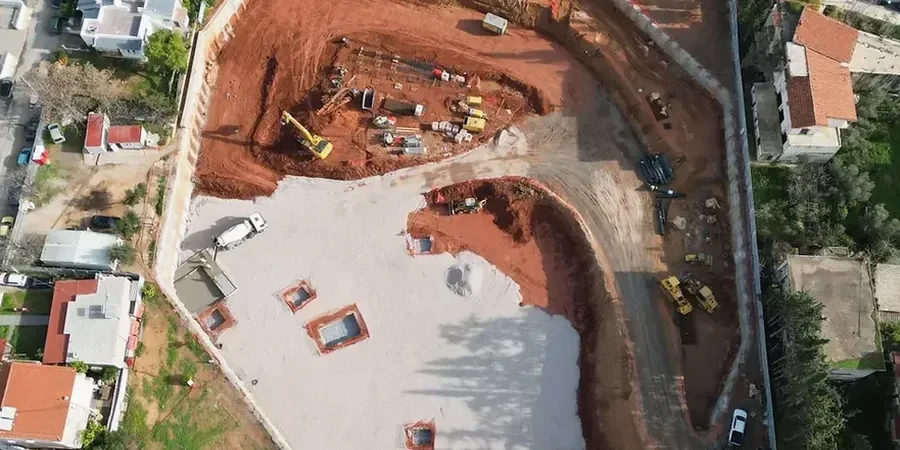
The practical applications of underground excavation in Sheffield are diverse and growing. Transport infrastructure projects, such as proposed mass transit systems or the upgrading of the existing Victorian culverts and sewers beneath the city centre, demand precise settlement control to protect adjacent historic buildings. The regeneration of former industrial sites, like those along the Don Valley, often requires deep basements for new commercial and residential developments, necessitating a careful geotechnical design of deep excavations with embedded retaining walls. Furthermore, the energy sector utilises underground excavations for heat networks and cable tunnels, while the management of Sheffield's steep topography frequently requires the construction of deep access shafts and retaining structures, all of which fall squarely within this critical geotechnical category.
The primary risks stem from the Coal Measures geology, which includes encountering uncharted historical mine workings, abrupt changes in rockhead depth, and variable strata from strong sandstone to weak mudstone. Superficial deposits like loose made ground and alluvium in the Don Valley add further instability, while groundwater pathways in fractured rock can cause sudden inflows, demanding thorough site investigation and risk assessment.
The Construction (Design and Management) Regulations 2015 (CDM 2015) are paramount, placing legal duties on all duty holders to manage health and safety. Geotechnically, design must conform to Eurocode 7 (BS EN 1997-1 and -2) with its UK National Annex. For temporary works, BS 5975:2019 provides the procedural code, and any support system preventing collapse must have a formal design and inspection regime.
The design philosophy shifts fundamentally towards deformation control. In a deep urban excavation, the primary objective is often to limit ground movements to a few millimetres to protect adjacent infrastructure, rather than just preventing collapse. This requires stiffer retaining wall systems, more complex soil-structure interaction analysis, and often a staged construction sequence using observational methods to validate design assumptions in real time.
Temporary works are engineered solutions, such as propping, anchoring, or sprayed concrete lining, that provide stability during the intermediate construction stages before the permanent structure is complete. They are a safety-critical element, especially in Sheffield's variable ground. Their design, supervision, and inspection are legally mandated under CDM 2015, following a strict procedural code to ensure they are installed and removed safely.
We serve projects across Sheffield and its metropolitan area.