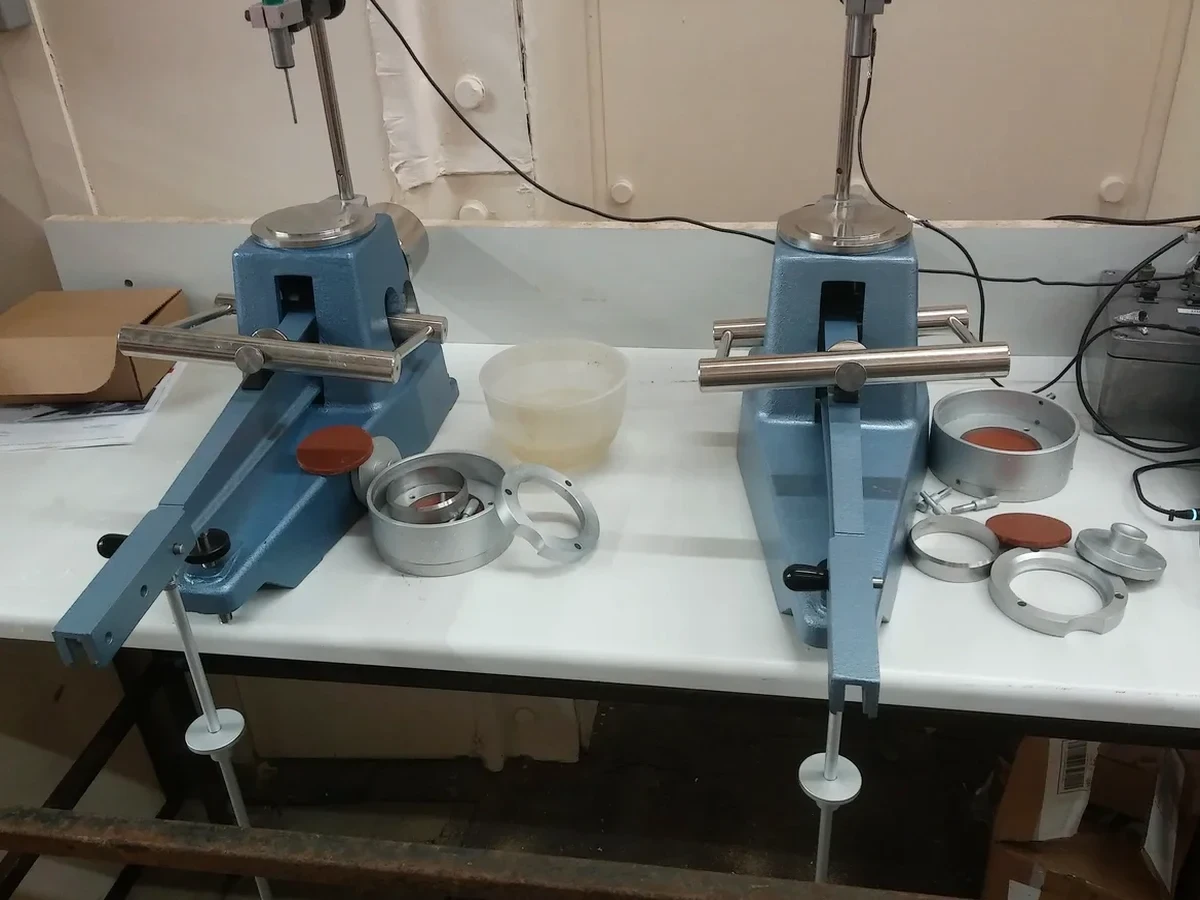
In Sheffield, the weathered mudstones and shales of the Pennine Lower Coal Measures can fool you. A sample might look like a competent rock in the trial pit, but after a few cycles of wetting and drying it slakes into a fine, plastic clay that behaves very differently under load. We see this pattern regularly with samples from the Crookes and Walkley areas, where the underlying geology is a complex mix of interbedded mudstone, siltstone, and thin coal seams. Getting a reliable set of Atterberg limits is the first step in classifying these materials properly. Many local sites also have head deposits: reworked, mixed material that doesn't match any textbook description, and that's where a simple plasticity chart plotted from liquid and plastic limits becomes indispensable for the design team. We run the full suite in our Sheffield laboratory, and because we know the local geology, we can often spot when a result doesn't fit the expected profile and needs a closer look before the report goes out. This early classification work ties directly into foundation recommendations, and when we're dealing with heavily overconsolidated clays from the Sheffield area, we often pair these tests with a cpt test to get a continuous profile of undrained shear strength without disturbing the sample structure.
A plasticity index above 25 percent in Sheffield's weathered mudstones is a red flag for volume change potential that no foundation designer should ignore.
Local geotechnical context
The risk profile for Atterberg limits in Sheffield splits roughly along the geological boundary that runs through the city centre. West of the Porter Brook, sites on the Lower Coal Measures often encounter high-plasticity clays derived from seatearths and fireclays; these materials can have a plasticity index exceeding 30 percent and a high shrink-swell potential that damages lightly loaded structures and service trenches. East of the M1 corridor, the Magnesian Limestone escarpment gives way to glacial till and lacustrine clays with lower plasticity but higher silt content, where the dominant failure mode is softening and loss of strength upon saturation rather than volume change. If you skip the Atterberg limits on a brownfield site in the Don Valley and assume a generic medium-plasticity clay, you can end up with earthworks that turn into a quagmire after a wet Sheffield winter. We have also seen cases where contractors misclassify a low-plasticity silt as a clay based on field texture alone; the lab results corrected the record and changed the compaction specification entirely, saving months of rework on the subgrade.
Questions and answers
How much does Atterberg limits testing cost in Sheffield?
For a standard suite covering liquid limit and plastic limit on a single sample, the cost ranges from £50 to £90 plus VAT, depending on sample condition and whether additional preparation such as removal of organic matter is required. We provide a firm quote once we understand the number of samples and the project context.
What sample quantity do you need for the test?
We need at least 150 grams of material finer than 425 µm for a full set of determinations. For bulk samples, a 1 kg bag is sufficient to allow for sieving and selecting a representative specimen. Samples should be sealed in airtight bags immediately after extrusion to prevent moisture loss.
Can you test samples that contain organic matter or peat?
Yes, but the procedure changes. Organic soils can produce misleading liquid limit values because the Casagrande cup method was calibrated on inorganic clays. We note organic content on the report and, when the loss on ignition exceeds 5 percent, we advise caution when using standard correlations derived from the plasticity chart.
How do Atterberg limits relate to shrink-swell potential in Sheffield clays?
The plasticity index is a reliable proxy for volume change potential. In our experience with Sheffield's Coal Measure mudstones, a PI above 25 percent typically indicates medium to high shrink-swell hazard, particularly in the seatearth clays found beneath coal seams. We plot results on the BRE Digest 240 classification and can recommend further testing such as swelling pressure oedometer tests if the project involves shallow foundations or buried services.