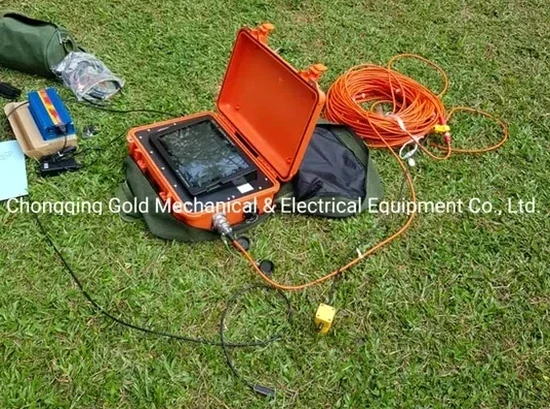
Seismic engineering in Sheffield sits at a crucial intersection of geology, regulation, and modern construction demands. While South Yorkshire is not typically associated with high seismicity like the Pacific Ring of Fire, the region experiences low-to-moderate seismic activity linked to ancient fault systems and occasional tremors from distant epicentres. Understanding seismic risk here is not about designing for catastrophic earthquakes, but about ensuring structural resilience, protecting critical infrastructure, and complying with evolving UK standards that reflect a precautionary approach to ground movement. This category encompasses the full spectrum of seismic assessment, from site-specific hazard evaluation to advanced computational modelling of soil-structure interaction.
Sheffield's underlying geology plays a defining role in how seismic waves propagate and amplify. The city straddles the Carboniferous Coal Measures, comprising interbedded sandstones, mudstones, and siltstones, overlain in valley bottoms by Quaternary alluvium and glacial till. These softer, unconsolidated deposits are particularly susceptible to ground motion amplification and, under certain groundwater conditions, cyclic softening. A foundational step in any seismic assessment here is a rigorous soil liquefaction analysis, which evaluates the potential for saturated granular soils to lose strength during shaking—a phenomenon that can compromise foundations even under moderate seismic loads.
The regulatory framework governing seismic design in Sheffield derives principally from Eurocode 8 (BS EN 1998), the dedicated standard for earthquake-resistant structures, as implemented through the UK National Annex. This code mandates consideration of seismic action based on a reference peak ground acceleration (PGA) mapped for the UK, which for Sheffield falls within a low-seismicity zone but still requires assessment for importance class II structures and above. Complementary guidance from the British Geological Survey and the Institution of Structural Engineers further shapes local practice, particularly regarding site classification and the selection of ground investigation techniques tailored to seismic parameters. Compliance is not merely a box-ticking exercise; it demands a nuanced interpretation of how national probabilistic hazard maps interact with local site conditions.
Projects that trigger seismic scrutiny in Sheffield range from tall residential towers and university research facilities to highway bridges, railway viaducts, and energy infrastructure. Any structure classified as importance class III or IV under Eurocode 8—such as hospitals, emergency response centres, or major transport hubs—requires a detailed seismic design report. Increasingly, commercial developers and insurers also request seismic risk assessments for large-scale brownfield regenerations, particularly where historical mining activity has altered ground stiffness. A comprehensive seismic microzonation study becomes invaluable for masterplans and urban extensions, mapping how different ground types across a site will respond to the design earthquake, thereby guiding foundation strategies and land-use decisions.
Sheffield lies in a low-seismicity zone, but recorded tremors and the presence of soft alluvial soils mean seismic risk cannot be ignored. Eurocode 8 mandates assessment for many structures, and ground amplification can turn a distant, moderate event into a local problem. Assessments are a genuine engineering necessity, not a bureaucratic formality, especially for safety-critical buildings and long-span infrastructure.
The key factors are the contrast between stiff Carboniferous bedrock and overlying soft Quaternary deposits in river valleys, which can amplify shaking. High groundwater tables in alluvial zones increase liquefaction susceptibility, while historical mine workings and made ground introduce stiffness irregularities that complicate seismic wave transmission and require careful site-specific characterisation.
Eurocode 8 (BS EN 1998-1 and BS EN 1998-5) is the primary standard, used alongside the UK National Annex which provides the seismic hazard map and PGA values. It must be applied in conjunction with Eurocode 7 for geotechnical design. The Building Regulations 2010 require structural safety, and Approved Document A references Eurocodes, making them the legal baseline.
Seismic assessment should begin at the feasibility or pre-planning stage, integrated with the first phase of ground investigation. Early shear wave velocity profiling and liquefaction screening can influence foundation choice and site layout, avoiding costly redesign later. For large schemes, a preliminary seismic desk study is advisable before land acquisition to identify any show-stopping geo-seismic hazards.
We serve projects across Sheffield and its metropolitan area.